The East Meets West: Academy Museum of Motion Pictures in the US Opens with a Groundbreaking Asian Influence
Updated: Oct 6, 2025

After nearly a decade in the making, the Academy Museum of Motion Pictures has officially opened its doors in Los Angeles, California, establishing the world's premier institution dedicated to the history and artistry of film, rivaled only by the China National Film Museum in Beijing.
While the stunning new campus sits in the heart of the filmmaking capital of the world, the story behind the scenes of its opening day is one steeped in Asian influence - featuring the creative mastery of Thai design, Singaporean cinematography, and a foundational exhibition honoring a Japanese animation titan.
A Thai Vision Shapes the Experience

The museum’s most striking features—the restored Saban Building and the new spherical David Geffen Theater—were designed by Pritzker Prize-winner Renzo Piano. However, the experience within the galleries, the very soul of the museum, was shaped by an Asian creative force. The exhibition design for the main galleries, including the expansive "Stories of Cinema," was led by Bangkok-born architect Kulapat Yantrasast and his firm, wHY Architecture.

Yantrasast, who is the first architect to be honored with the prestigious Silpathorn Award from the Thai government, has emerged as a global leader in museum design. His approach, which he calls "Acupuncture Architecture," focuses on creating spaces that connect historical structures with contemporary storytelling. In this context, his team designed the flexible, immersive interiors that guide visitors through cinema’s complex history. For an institution dedicated to global cinema, having a Thai architect responsible for designing the narrative flow of the exhibitions underscores the Academy’s commitment to an international perspective from the inside out.
The Incomparable Japanese Master

Adding to the strong Asian representation, the museum chose the undisputed master of Japanese animation, Hayao Miyazaki, as the subject of its very first major exhibition. The self-titled retrospective, a landmark collaboration with Studio Ghibli, spans the entire fourth floor of the museum and gave the legendary director's work unprecedented attention. Featuring over 300 objects, some never viewed publicly before, including storyboards, character designs, and film clips.

This decision to spotlight an Asian filmmaker for the museum's launch is a significant moment in Hollywood history, positioning the narrative and aesthetic brilliance of Japanese animation at the core of global cinema history from day one. It signaled that the Academy Museum is dedicated not just to Hollywood, but to the world of motion pictures in its entirety.
Captured And Viewed Through a Singaporean Lens
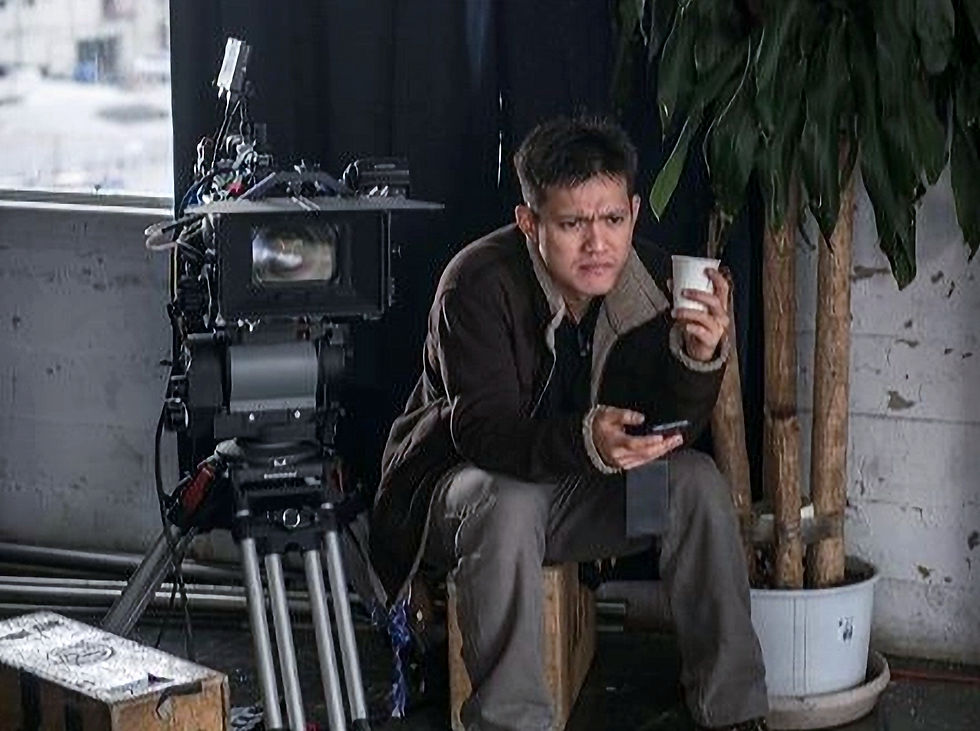
Completing the trifecta of Asian artistic influence, the official opening film introducing the museum to the world was entrusted to Singaporean Cinematographer Justin Ivan Hong. Having earned accolades for his narrative film work cross culturally in both Asia and the US, Hong was brought on by New York based production agency Atsion Run to frame the monumental opening for a global audience, adding a Southeast Asian artistic sensibility to the historic moment.
Film Asia managed to speak briefly with Hong during the opening ceremony to discuss the experience and the significance of the museum’s inaugural focus.
---------------------------------------------------------------------------------------------------------
Film Asia (FA): Justin, congratulations on filming and being a part of this historic milestone. What was it like being one of the first to film inside this monumental new space?
Justin Ivan Hong (JH).: Honestly It was so inspiring. The museum itself is a cinematic experience — Renzo Piano’s Sphere building, the expansive theatre, and also the way Kulapat Yantrasast laid out the galleries. As a Cinematographer, I'm always looking for unique light and compositions; Spaces and locations really influence and bring out the creativity within me. This beautiful building and space is truly unique - There's nothing like it.
FA: The film looks so incredible. What would you say were some of the standout features for you?
JIH: Thank you so much for your kind compliments! I mean, I don't mean to be hyperbolic, but it really looked good any which way I pointed the camera. But, I'd have to say probably the glass dome at the top of the sphere is the obvious standout feature. We got some shots with the drone team at night when the lights came on and it was just amazing.

FA: We saw that in the film! What about inside the galleries? Could you share some thoughts about being in there?
JIH: I really loved being in there. What struck me most was the significance of the objects — seeing Dorothy's ruby slippers, the shark from Jaws, the props from Citizen Kane — I mean, these are films that have had a huge influence on all of us in the industry today. Realizing I was tasked with filming and capturing these iconic pieces for the world meant so much to me personally.
FA: As an Asian filmmaker, what did it mean to you that the first major exhibition was dedicated to Hayao Miyazaki and Studio Ghibli?
JIH: It’s a profound moment and I feel really proud. Even though I'm not Japanese, I think Asian people on the whole, and even more so East Asian people, share a certain bond and kinship. Miyazaki-san is a global icon, of course, but for a new institution in the heart of Hollywood to say, 'Our first showcase is from Asia' — that’s a huge statement. It validates the impact of Asian cinema, not as a separate category, but as a foundational pillar of motion picture art. When you walk into the exhibition, you feel the respect for the craft and the depth of the storytelling. It reinforced the idea that this museum is for all of cinema.
FA: Any last thoughts before we let you go?
JIH: Honestly it was an honour to be there and be involved in my own little way. As a Singaporean, witnessing a Thai designer’s work surrounding a Japanese master’s exhibition, and capturing it all through my lens - It really felt like a truly international opening for a truly global art form.
---------------------------------------------------------------------------------------------------------
The Academy Museum of Motion Pictures officially opens to the public on September 30th. The Hiyao Miyazaki Retrospective Exhibition runs through June 5, 2022.